
Emerging System Insights
New Zealand grows, produces and transforms fibre across a broad range of fibre types and applications, from wool, hides and skins, to hemp, harakeke, alpaca, cashmere, mohair and emerging biomaterials.
Until now, these fibres have largely been viewed separately: by commodity, industry body, supply chain or market. Future of Fibre Aotearoa takes a system-wide approach.
Through stakeholder interviews, industry engagement and quantitative analysis, we have been building a cross-sector view of New Zealand’s fibre ecosystem, from what we grow and cultivate, to how fibre is processed, transformed, sold, and valued.
What is emerging is a picture of real strength, critical gaps, and a clear opportunity to do more with what Aotearoa already produces.
This page shares early insights from the current state Ecosystem Mapping phase of the work. The research is still developing, and we invite industry to help shape what comes next.
A fibre sector is emerging
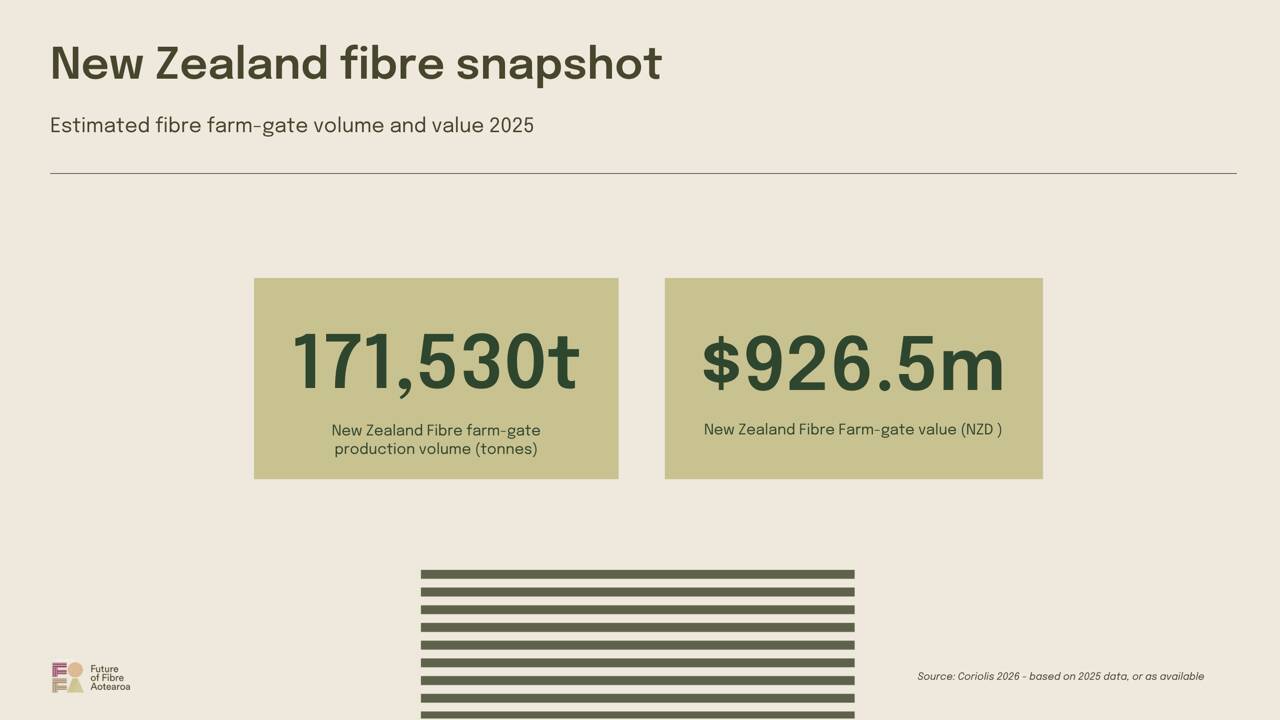
New Zealand produces a diverse range of natural fibres, from established streams such as wool, hides and skins, to emerging fibres including hemp, harakeke, alpaca, cashmere and mohair, and experimental biomaterials still developing their commercial pathways.
Seen individually, each fibre has its own market, maturity level, value chain and barriers to growth. Seen together, a wider system comes into focus.
The research shows shared constraints, common opportunities and points of connection that are not always visible from within a single fibre group. Seeing fibre as a sector makes the differences between fibres more useful.
It allows us to ask where fibre groups can learn from one another, where shared infrastructure or capability could benefit multiple parts of the system, where collaboration could support development, and where the most distinctive opportunities lie for each fibre type.
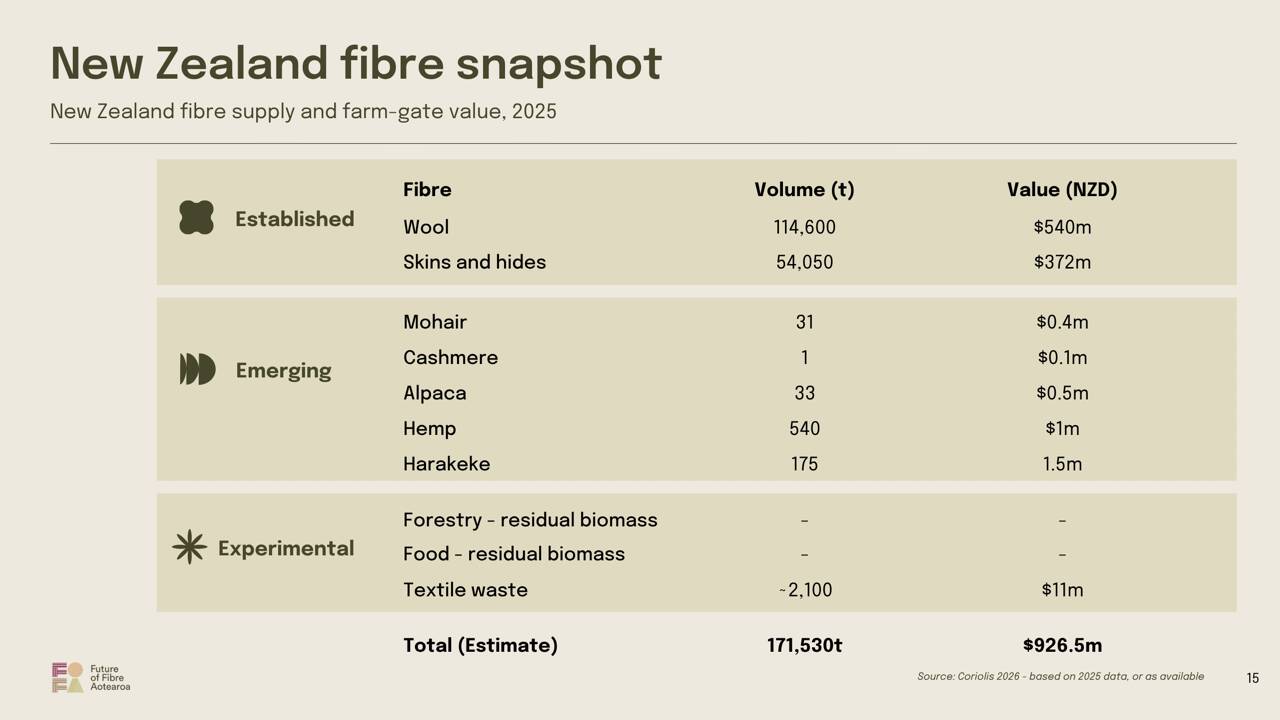
Value is captured through transformation, not raw production alone
Our research found that the future of New Zealand's fibre sector will not only be defined by what we produce, but by how we transform fibre into high-value products, materials and systems that meet real market needs.
New Zealand currently exports much of its fibre as raw or minimally processed material, with significant downstream processing happening offshore.
At the same time, we import approximately 116,000 tonnes of yarn, textiles and manufactured goods annually.
We manufacture around 93,000 tonnes of carpet, textiles and apparel domestically, but export only 11,000 tonnes of finished product.
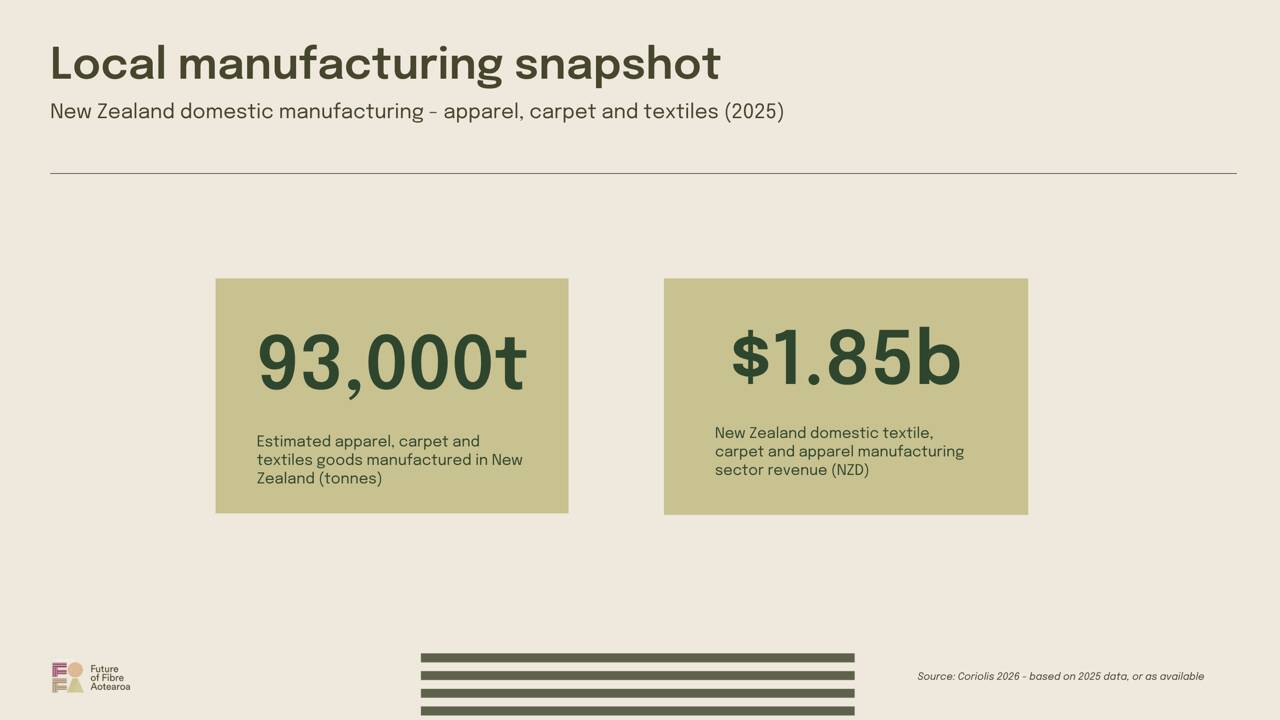
The gap between what we produce, what we transform onshore, and what we sell into global markets as finished goods highlights a central opportunity for the sector that we will explore in more detail as the project evolves.
We heard that value is created when fibre is transformed into finished products, performance materials, technical applications and brands that connect to specific market needs. This requires design and product development capability, technical validation, processing infrastructure, provenance and trust, connected value chains, and deep market understanding.
The research consistently found that Aotearoa's competitive advantage is strong when premium fibre quality is combined with design-led innovation, provenance, technical performance, and direct relationships from growers through to makers, brands, specifiers and customers.
The sector has real strengths, but they are not yet reaching their full potential
New Zealand's fibre system has strong foundations. These include:
world-class natural fibre quality, supported by integrity of production systems and traceability
pockets of applied innovation and design-led product development, particularly visible in strong wool and emerging fibres
relationship-based value chains that connect growers, makers, brands and specifiers
values-led and IP-driven business models, including place-based and culturally grounded fibre systems
growing global demand for natural, bio-based and lower-impact materials from trusted sources
These strengths are significant.
However, a set of structural constraints, built up over decades of industry contraction, fragmentation and underinvestment, continue to limit the sector’s ability to realise its potential.
Five shared constraints emerged strongly through the research:
Fragmentation across the sector
Limited coordination and knowledge sharing across fibres, regions and value chain stages is slowing collective progress.Limited processing and manufacturing capability
The “missing middle” of accessible prototyping, small-batch processing and mid-scale manufacturing remains a critical gap.Weak pathways from innovation to market
Promising ideas often struggle to move from concept to commercial scale because of limited access to prototyping, validation, partners and capital.Skills loss and capability gaps
Specialist textile, processing and manufacturing skills are becoming harder to access, creating a growing system-level risk.Demand creation and market access
Building sustained global demand requires brand development, market intelligence and relationships that are difficult for smaller businesses to develop alone.
While many of these constraints are shared, each fibre group also has its own market dynamics, maturity level and specific barriers to growth.
Encouragingly, there is strong signals of coordination and alignment happening within individual fibre groups including wool, hemp and harakeke to address these issues.
What comes next
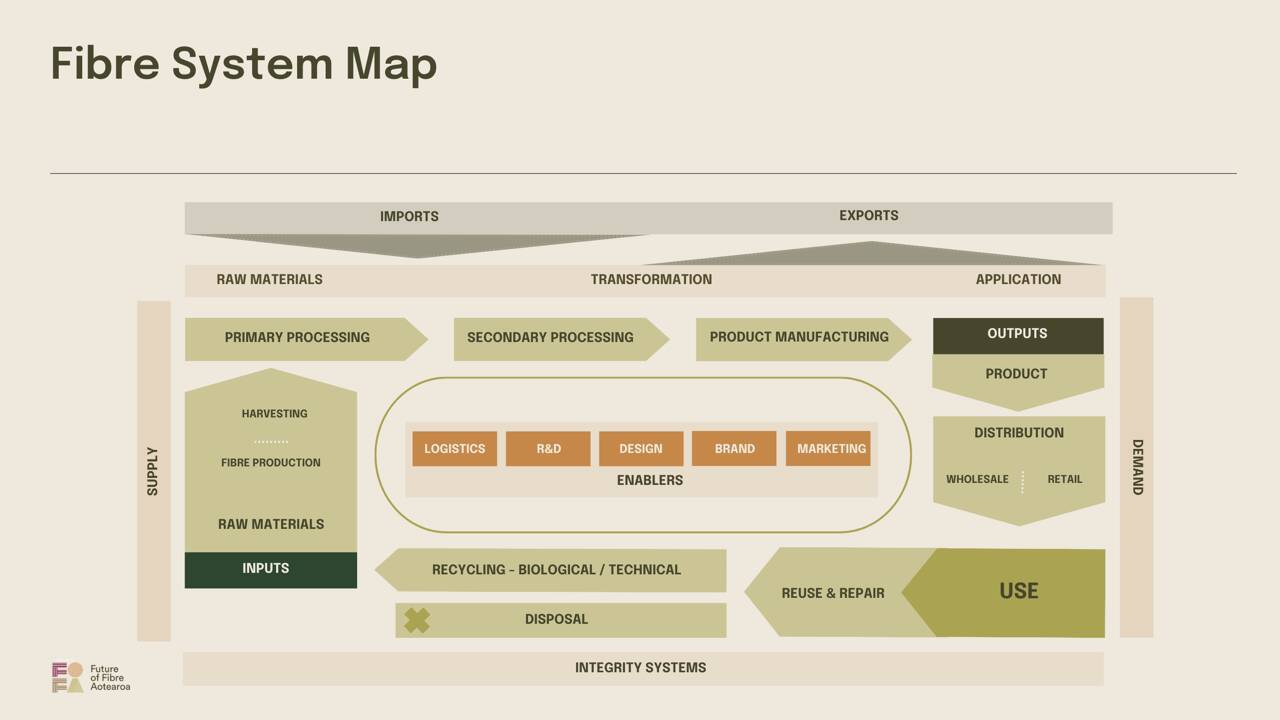
Our Ecosystem mapping the current state is a starting point. It is a comprehensive cross-fibre view of New Zealand’s fibre system, but there is more to learn.
Knowledge gaps remain in biomaterials and side-streams, global market dynamics, emerging processing technologies, and the capital investment landscape.
The next phase of Future of Fibre Aotearoa will consolidate qualitative and quantitative insights, identify and model opportunities that create more value for Aotearoa's fibre, and share case studies and findings in a foundational fibre report that looks beyond the current state to explore the sector’s future potential, including where investment and capability development could be prioritised.
Industry participation is essential. This work is only as strong as the knowledge, experience and perspectives that shape it.
If you work in fibre, as a grower, processor, manufacturer, designer, researcher, innovator, brand, investor or market partner, we want to hear from you.
Want to contribute to this work?
We're continuing to engage industry as this research develops. Get in touch to share your perspective, flag gaps in our mapping, or find out how to be involved in the next phase.
Contact us ask@fashiontextilesnz.org